In the immediate aftermath of the Dunkirk evacuation in June 1940 Gillingham Tailor, Arthur Shephard pulled over in his Austin 10 to offer a lift to a bedraggled young soldier thumbing a lift to get back to his unit in Warminster. As a veteran of the ill-fated Gallipoli campaign Arthur recognised a kindred spirit in desperate need of assistance.
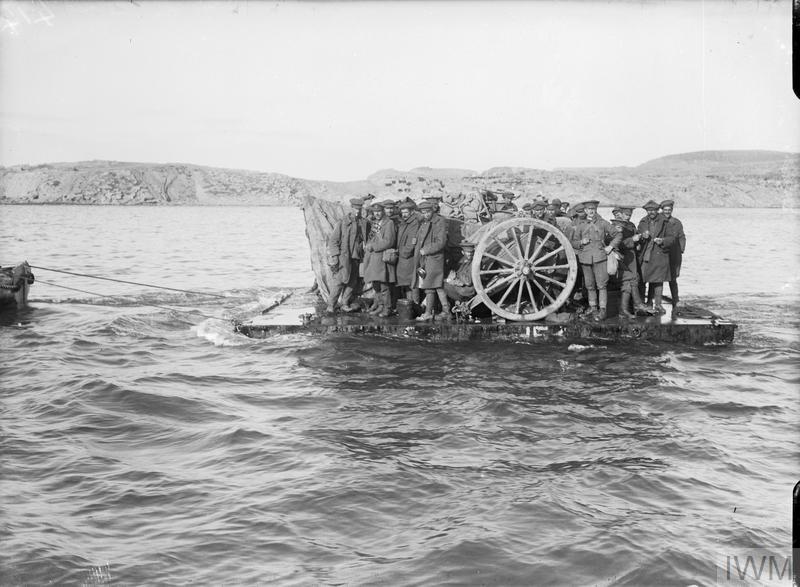


The first image taken during the Gallipoli campaign shows British troops and their artillery guns being evacuated from Suvla Bay on rafts in daylight, December 1915. Covering aspects of the 1940 Dunkirk evacuation, the second shows three of the armada of 'little ships' which brought the men of the British Expeditionary Force from the shores in and around Dunkirk, to the safety of British warships and other vessels. The third photograph shows British soldiers wading out to a waiting destroyer off Dunkirk. Exposed and vulnerable, lines of queuing troops were bombed and strafed whilst waiting to be evacuated. The final picture depicts British troops crowding the deck of a Royal Navy destroyer at Dover, 31 May 1940. Images are Courtesy of the Imperial War Museum. See http://www.iwm.org.uk/collections/item/object/205193298 and http://www.iwm.org.uk/history/7-photos-from-the-dunkirk-evacuations.
Arthur very kindly drove the soldier, who was soaked to the skin, to his shop in Gillingham and gave him a change of dry clothes before taking him on to Warminster, a round trip of of some 60 miles out of his way, acts of kindness notable at a time when both clothing and petrol were rationed. Arthur thought nothing more about the matter until some six months later when an unexpected parcel arrived together with an accompanying letter:-

It transpired that the young soldier was Harold Robinson's eldest son Eric, and it is clear from the letter that he was very appreciative of Arthur's kindness. Despite the spelling errors and lack of detail in the address, thanks to Royal Mail and the greatly reduced size of the population in Gillingham at the time the parcel still made it to the intended recipient.

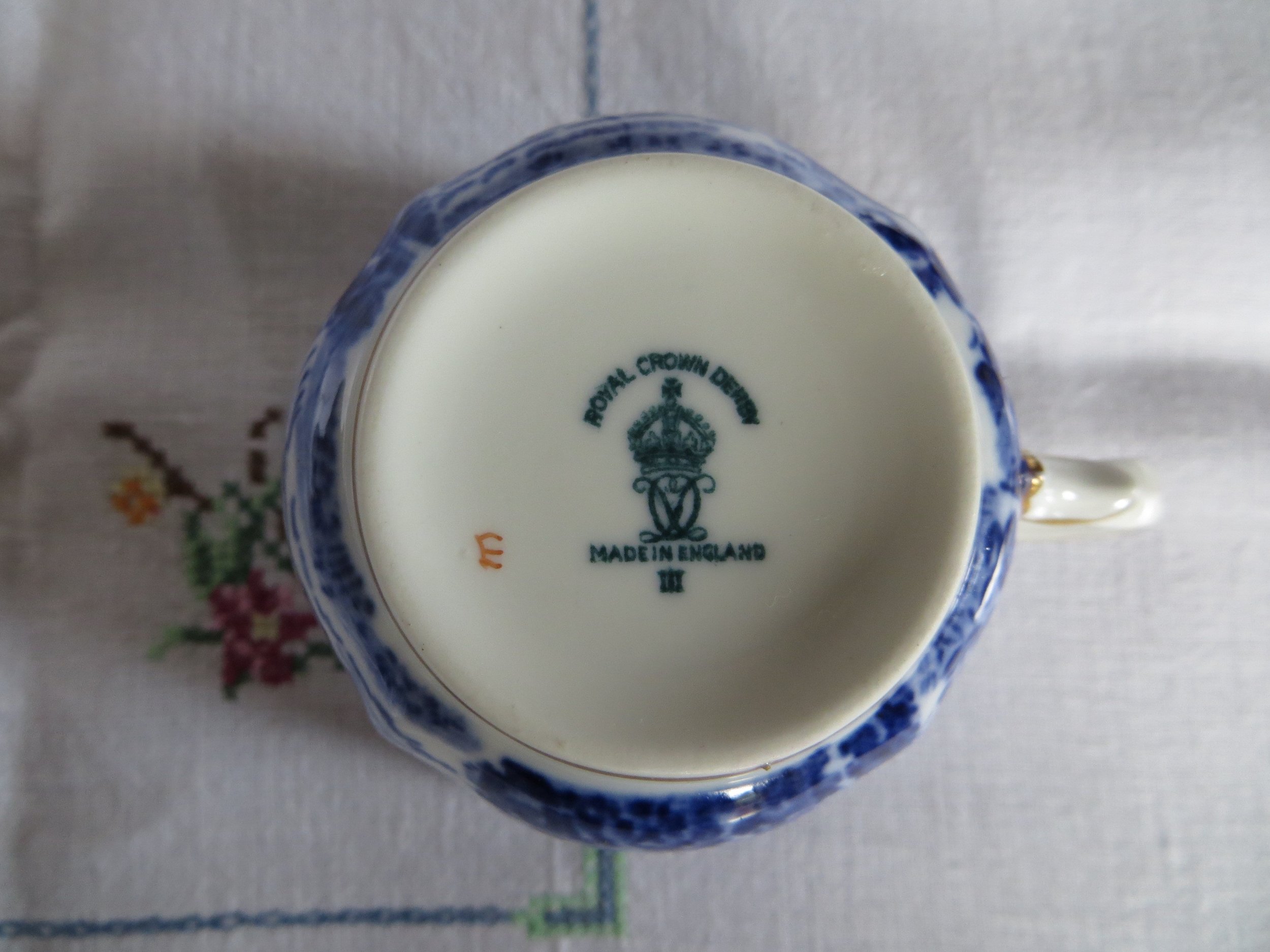

The tea service in the Mikado pattern is pictured above (Images courtesy of John Shephard) and occupied pride of place in the drawing room of the family's house and business in Queen Street, Gillingham (see image above). It would have been regarded as a very significant gift at the time, as Board of Trade restrictions prevented the sale of decorated ware in the home market and this pattern was only produced for export. In a recent article by journalist Michael Streeter in the Gillingham News, Arthur's son John is quoted as saying that his father's action "was very much in character actually. My father was a quietly good man. My parents rather treasured the set, it was something they were very proud of. I would never part with the tea service, it means an awful lot to me."
Eric did not talk about his experience at Dunkirk, completing his war service and subsequently returning to Derby. There he worked in the family business, managing the "clay end" of the manufacturing process until he left to move to Uttoxeter in 1953.
If you would like to read the article by Michael Streeter in full see https://www.gillingham-news.co.uk/digital-editions/ September 2017 issue page 3
John and Valerie Robinson September 2017.